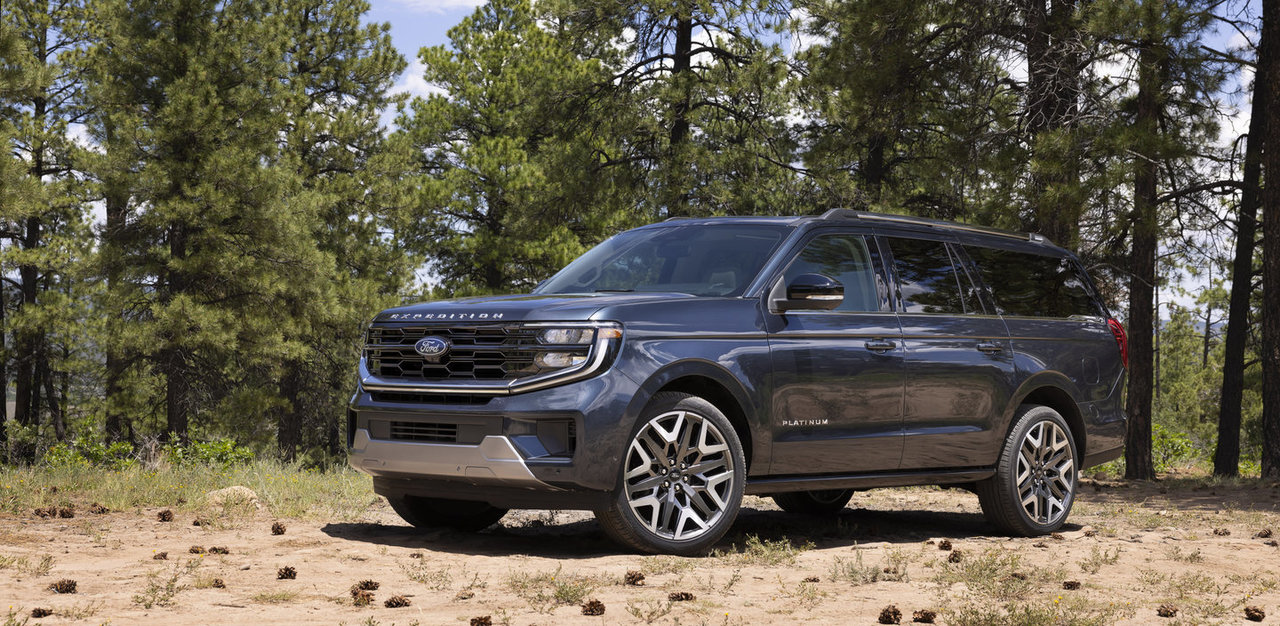
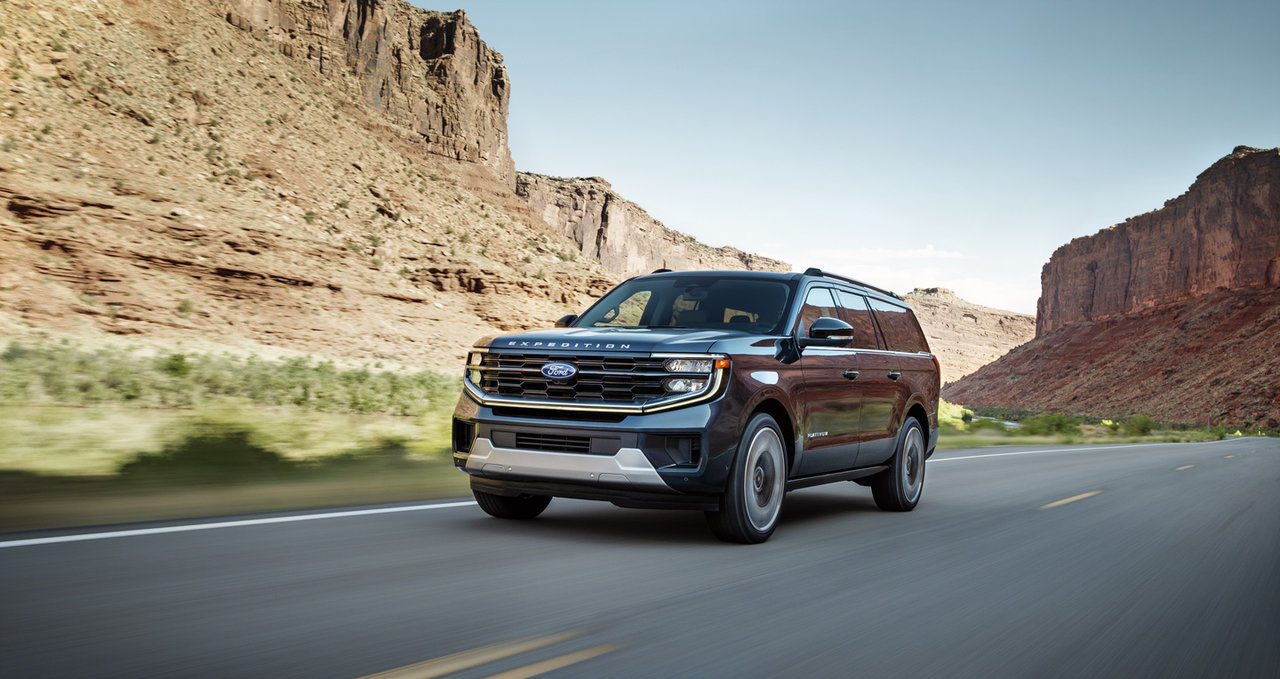
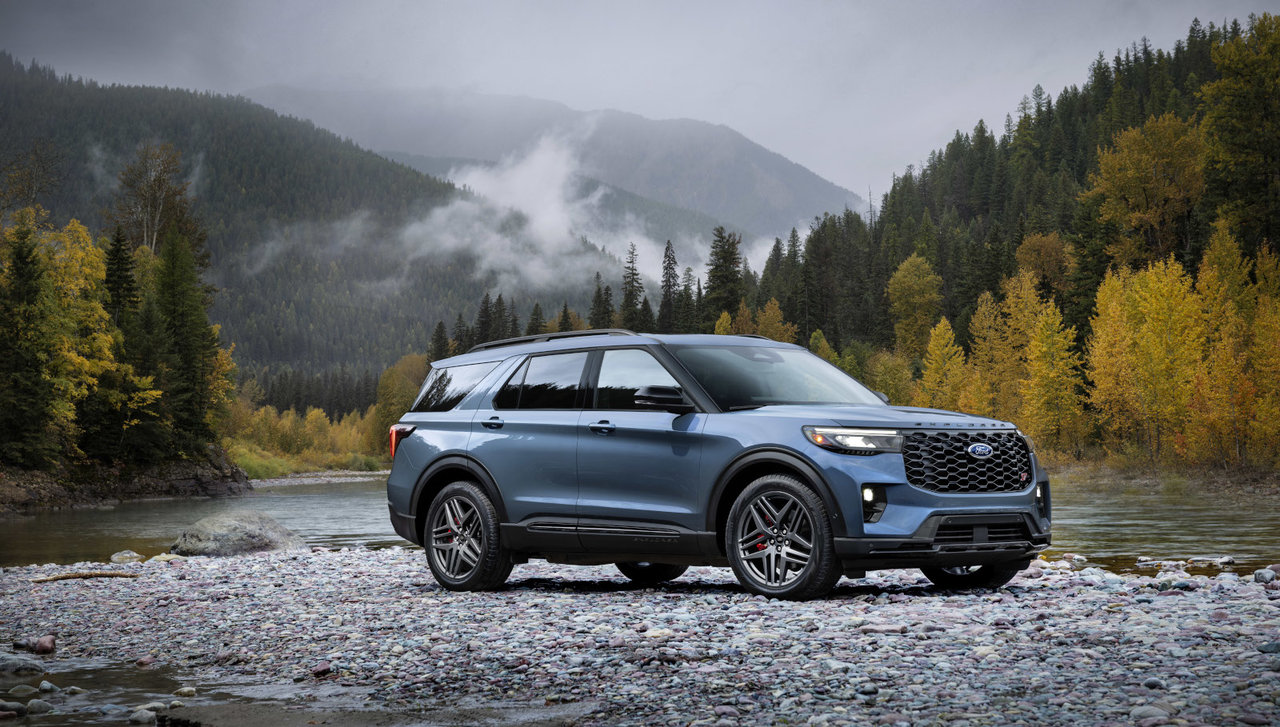
The 2026 Ford Expedition lineup offers two distinct configurations to match your family's winter lifestyle: the standard wheelbase Expedition and the extended-length Expedition MAX. Both deliver the capability and comfort needed for snowy road trips, ski weekends, and holiday travel, but they differ in cargo space and overall dimensions.
Whether you're hauling winter sports equipment, towing a trailer to the cottage, or simply need room for multiple passengers and their gear, the Expedition lineup provides full-size SUV versatility with seating for up to 8 passengers. Both configurations share the same powerful engine options, advanced technology, and winter-ready features - the choice comes down to how much space you need.
Dimensions: Standard vs. Extended Wheelbase
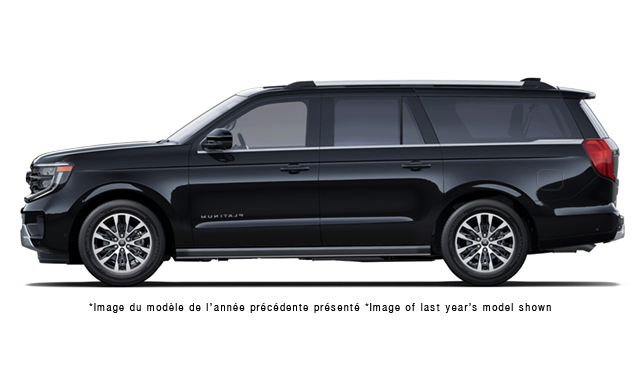
The main difference between the Expedition and Expedition MAX lies in their dimensions. The standard Expedition rides on a 3,112 mm wheelbase with an overall length of 5,331 mm, while the Expedition MAX extends to a 3,341 mm wheelbase and 5,631 mm overall length. This nearly 300 mm difference translates directly into cargo capacity.
Both configurations maintain the same 2,402 mm width with mirrors and identical 220 mm ground clearance (269 mm on Tremor models). The standard Expedition stands 1,981 mm tall, while the MAX measures 1,978 mm. These similar dimensions mean both versions navigate winter roads and parking lots with comparable ease - the MAX simply stretches longer to accommodate more cargo behind the third row.
Cargo Capacity: Where the MAX Excels
Cargo space defines the primary advantage of the Expedition MAX. With all three rows in use, the MAX offers 1,059 litres of cargo volume behind the third row - ideal for storing winter coats, boots, and smaller gear items. Fold the third row flat, and capacity expands to 2,135 litres. Drop the second row, and you unlock 3,485 litres of total cargo space.
The standard Expedition provides less cargo volume in each configuration, though specific measurements were not detailed in the documentation. The MAX's extended wheelbase adds up to 11.8 inches of extra cargo length, making it the clear choice for families who regularly travel with full passenger loads and substantial winter equipment like skis, snowboards, or hockey bags.
Expedition MAX Cargo Configurations:
- Behind 3rd row (seats up): 1,059 litres
- Behind 2nd row (3rd row folded): 2,135 litres
- Behind 1st row (2nd and 3rd rows folded): 3,485 litres
- Total passenger volume: 4,955 litres
Powertrain and Capability: Identical Performance
Both the standard Expedition and Expedition MAX offer the same powertrain options. The standard 3.5L EcoBoost V6 produces 400 hp and 480 lb-ft of torque, paired with a 10-speed automatic transmission and Control Trac 4-wheel drive. This engine delivers confident winter traction and strong acceleration for highway passing or merging.
Platinum trim buyers can upgrade to the 3.5L High-Output EcoBoost V6, which generates 440 hp and 510 lb-ft of torque. Tremor models come standard with this high-output engine. All engines use PFDI dual fuel delivery and twin-turbo V6 configuration, ensuring responsive power delivery in cold weather conditions.
Towing capacity varies slightly between configurations. The standard Expedition tows up to 4,354 kg (9,600 lbs), while the MAX tows up to 4,082 kg (9,000 lbs). Tremor models are rated for 4,218 kg (9,300 lbs). These differences reflect the MAX's additional weight, though all configurations provide substantial towing capability for winter trailers, snowmobile haulers, or travel campers.
Interior Space: Room for Everyone
Interior dimensions remain identical between both wheelbase configurations. First-row headroom measures 1,061 mm (1,005 mm on Tremor), second-row headroom is 1,015 mm (1,005 mm on Tremor), and third-row headroom sits at 950 mm. Legroom is equally generous: 1,115 mm in the first row, 1,043 mm in the second row, and 927 mm in the third row.
Shoulder and hip room measurements also match across both models. First-row shoulder room spans 1,648 mm, with second-row at 1,647 mm and third-row at 1,630 mm. Hip room measures 1,582 mm in both front rows and 1,305 mm in the third row. These identical measurements mean passenger comfort remains consistent regardless of which wheelbase you choose - the MAX advantage is purely in cargo capacity behind the seats.
Technology and Features: Standard Across Both
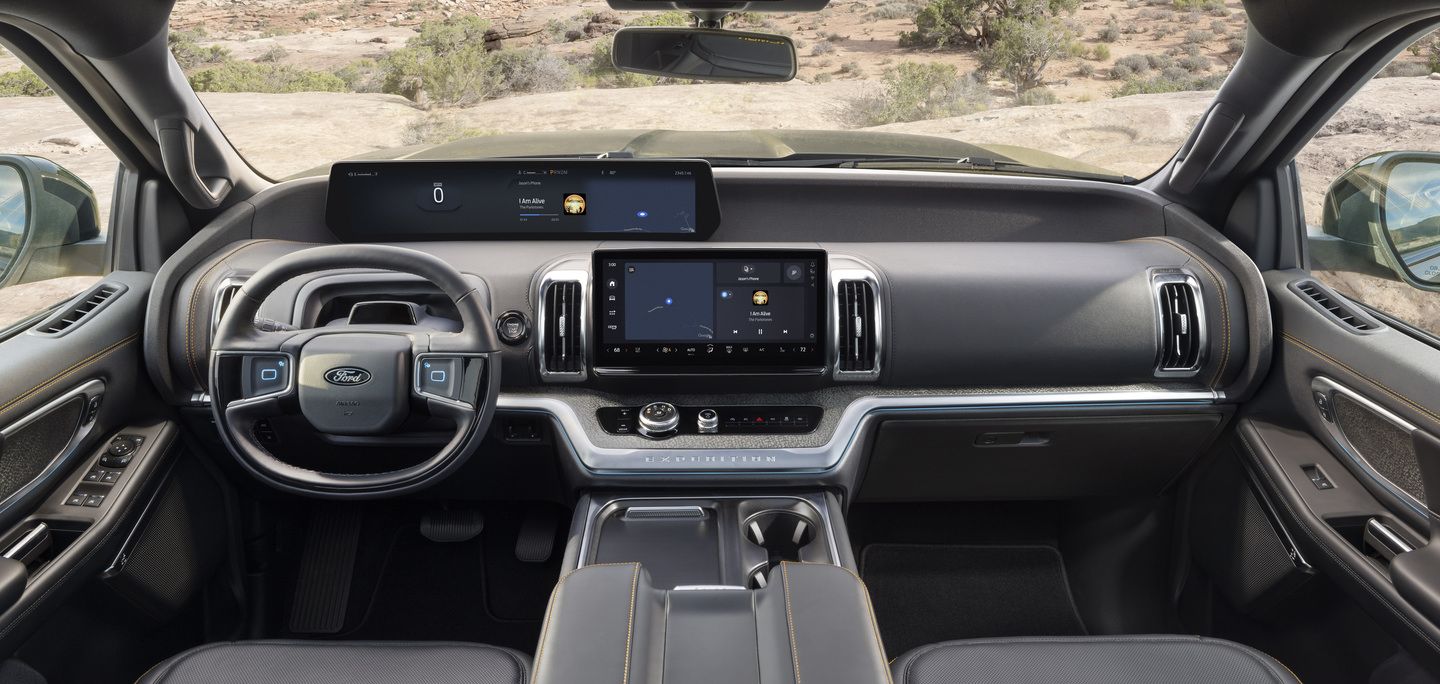
The 2026 Expedition lineup equips both standard and MAX models with the same advanced technology. The 24-inch panoramic display dominates the dashboard, paired with a 13.2-inch centre touchscreen running Ford Digital Experience. This system integrates Google Play Store apps, wireless Apple CarPlay and Android Auto, and 5G Wi-Fi hotspot capability for up to 10 devices.
The innovative Ford Split Gate comes standard on all models. Three-quarters of the gate raises like a conventional SUV liftgate, while the lower quarter folds down for easier loading and unloading of heavy winter gear. Available "Open On Approach" functionality adds hands-free convenience when carrying armloads of equipment.
Ford Co-Pilot360 2.0 provides driver assistance features including Pre-Collision Assist, Adaptive Cruise Control, and available BlueCruise hands-free highway driving. Pro Trailer Hitch Assist and Pro Trailer Backup Assist simplify winter trailer towing, while Zone Lighting (available on Platinum) illuminates the area around the vehicle for nighttime camping or loading.
Trim Availability and Pricing
Both wheelbase configurations are available in Active, Platinum, and King Ranch trims. The off-road focused Tremor is exclusive to the standard wheelbase, reflecting its specialized capability and shorter wheelbase's advantage for technical terrain.
|
Trim
|
Standard Wheelbase
|
MAX Wheelbase
|
|
Active
|
~$86,065
|
~$89,565
|
|
Platinum
|
~$99,695
|
~$103,195
|
|
King Ranch
|
~$111,485
|
~$114,985
|
|
Tremor
|
~$109,365
|
Not Available
|
The ~$3,500 premium for MAX models applies consistently across all available trims. This pricing difference reflects the extended wheelbase, additional cargo capacity, and slightly higher curb weight.
Fuel Efficiency: Consistent Across Both
Fuel consumption estimates remain identical for both standard and MAX models. The 3.5L EcoBoost V6 with 4-wheel drive achieves 15.4 L/100 km in city driving, 10.7 L/100 km on the highway, and 13.3 L/100 km combined. These estimates reflect real-world winter driving conditions, including cold-weather engine warm-up and occasional 4WD engagement for snow-covered roads.
Which Configuration Fits Your Winter Needs?
Choose the standard Expedition if you prioritize maneuverability, lower initial cost, or rarely need maximum cargo capacity with all seats occupied. The standard wheelbase excels for families who occasionally fold the third row for cargo but primarily use the vehicle for passenger transport. It also provides the only path to the off-road focused Tremor trim.
Select the Expedition MAX if you regularly travel with full passenger loads and substantial cargo, frequently take extended winter trips requiring luggage for multiple people, or simply want the peace of mind that comes with maximum cargo flexibility. The 1,059 litres behind the third row makes a meaningful difference when loading winter sports equipment, groceries, or travel bags without compromising passenger capacity.
Both configurations deliver the same winter capability, technology, and passenger comfort. The decision comes down to cargo priorities and whether the ~$3,500 premium for the MAX aligns with your actual storage needs throughout the year.
Experience the 2026 Expedition at Valley Ford
The 2026 Ford Expedition lineup offers full-size capability with modern technology and winter-ready performance. Whether you choose the standard wheelbase for everyday versatility or the MAX for maximum cargo capacity, both configurations deliver the space and features Nova Scotia families need for winter adventures. Visit our team at Valley Ford to compare both wheelbase options and find which Expedition configuration matches your winter lifestyle.