Long highway drives between Atlantic communities can wear you down. Ford's BlueCruise and Co-Pilot360 systems are designed to handle some of that workload, keeping you alert and reducing the mental strain that builds up over hours behind the wheel.
BlueCruise offers hands-free driving on mapped highways, while Co-Pilot360 provides active safety features that monitor your surroundings and step in when needed. Together, they change how long-distance driving feels on rural highway corridors.
How BlueCruise Works on Atlantic Highways
BlueCruise is Ford's hands-free highway driving system. It uses cameras and radar to keep the vehicle centred in its lane and maintain a set distance from traffic ahead - all without your hands on the wheel.
A driver-facing camera confirms you are watching the road. If your attention drifts, the system alerts you and eventually disengages if you do not respond. This keeps the driver in the loop while reducing the physical effort of steering and speed adjustments on long, straight highway sections.
BlueCruise requires compatible hardware, which is standard on select Ford EVs and plug-in hybrids, and available on certain gas and hybrid models. The system works only on Ford-mapped and approved highways. Local roads, construction zones, and unmapped rural highways are off-limits.
Co-Pilot360: The Safety Net That Never Stops Watching
Co-Pilot360 is Ford's standard suite of driver-assist features included on most Ford vehicles. It covers adaptive cruise control, lane-keeping assist, blind spot monitoring, and automatic emergency braking. These systems are always active, even when BlueCruise is not engaged.
Adaptive cruise control adjusts your speed to match the vehicle ahead, maintaining a safe following distance without constant throttle and brake inputs. On a two-lane highway with slower-moving traffic, this reduces the decisions you make per minute, which adds up over a multi-hour drive.
Lane-keeping assist nudges the steering wheel if you drift toward the line without signalling. It is not aggressive - just a gentle correction that keeps you centred. On highways with narrow shoulders or rough pavement edges, this prevents the small steering errors that accumulate when you are tired.
Blind spot monitoring uses radar to detect vehicles in adjacent lanes. A light in the side mirror warns you when someone is there, and if you signal to change lanes anyway, the system can apply steering torque to keep you in your lane.
Automatic emergency braking monitors the road ahead and applies the brakes if a collision is imminent and you have not reacted. It works at highway speeds and in stop-and-go traffic, designed to prevent rear-end collisions common when drivers are distracted or fatigued.
Why These Systems Matter on Rural Atlantic Routes
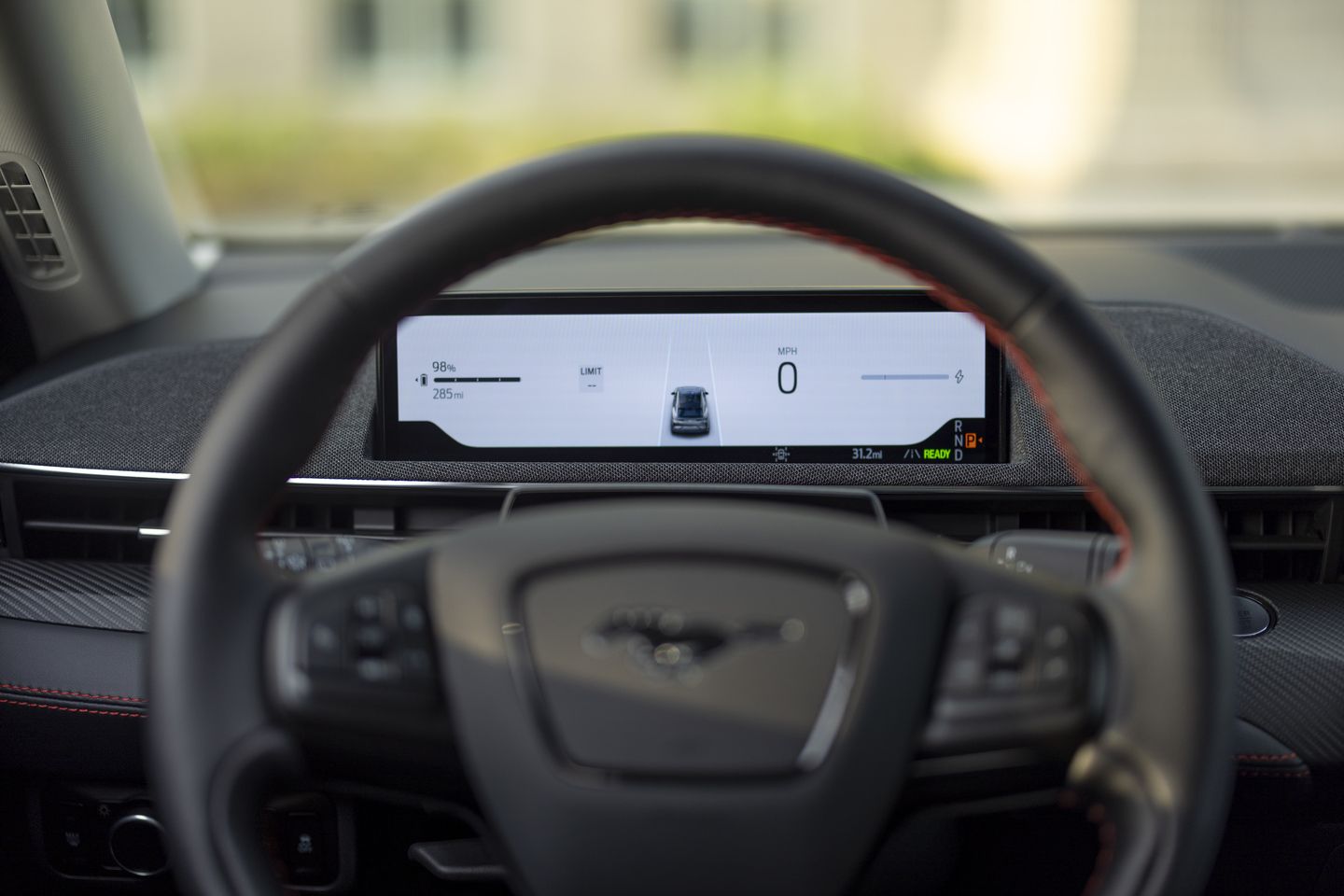
Atlantic highways differ from urban expressways. Traffic is lighter, but roads are longer, straighter, and more monotonous. The scenery is beautiful, but the lack of visual variety can make it harder to stay focused. Wildlife crossings are common, especially at dawn and dusk. Weather can change quickly, and fog, rain, or snow reduce visibility without warning.
BlueCruise and Co-Pilot360 address these conditions by reducing the cognitive load of driving. You still watch the road, but the systems handle repetitive tasks - maintaining speed, staying centred, monitoring blind spots. This frees up mental bandwidth for scanning for wildlife, watching for weather changes, and staying alert for the unexpected.
The systems also help on the return leg of a long trip, when fatigue is highest. BlueCruise and Co-Pilot360 do not eliminate fatigue, but they reduce the physical and mental effort required to stay safe.
What These Systems Do Not Do
BlueCruise is not self-driving. It requires you to watch the road at all times and will disengage if you do not. The system works only on pre-mapped highways, so local roads and rural routes are off-limits. It does not handle construction zones, sharp curves, or complex merges.
Co-Pilot360 features are driver aids, not replacements for attention. Lane-keeping assist will not prevent you from leaving the lane if you ignore warnings. Adaptive cruise control will not stop the vehicle in all situations. Blind spot monitoring does not eliminate the need to check your mirrors.
These systems reduce fatigue and improve safety, but they do not remove the driver's responsibility. You are still in control and need to be ready to take over at any moment.
Why This Matters for Atlantic Drivers
If you routinely drive between communities in Nova Scotia or New Brunswick, these systems change the experience. Long highway drives become less tiring. The return leg after a long day is safer.
BlueCruise and Co-Pilot360 are not about convenience - they are about reducing the risk that comes with fatigue. Long highway drives are where mistakes happen, and these systems help prevent them.
Explore Ford vehicles equipped with BlueCruise and Co-Pilot360 at Valley Ford in Kentville.