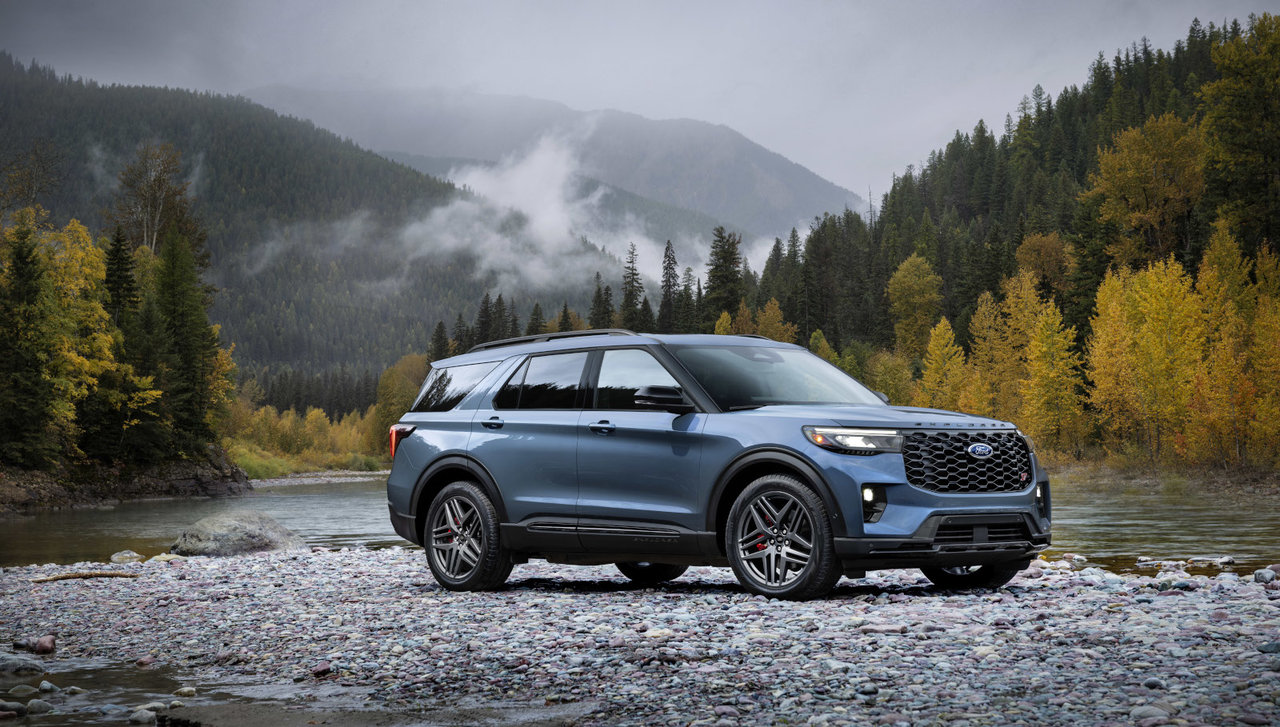
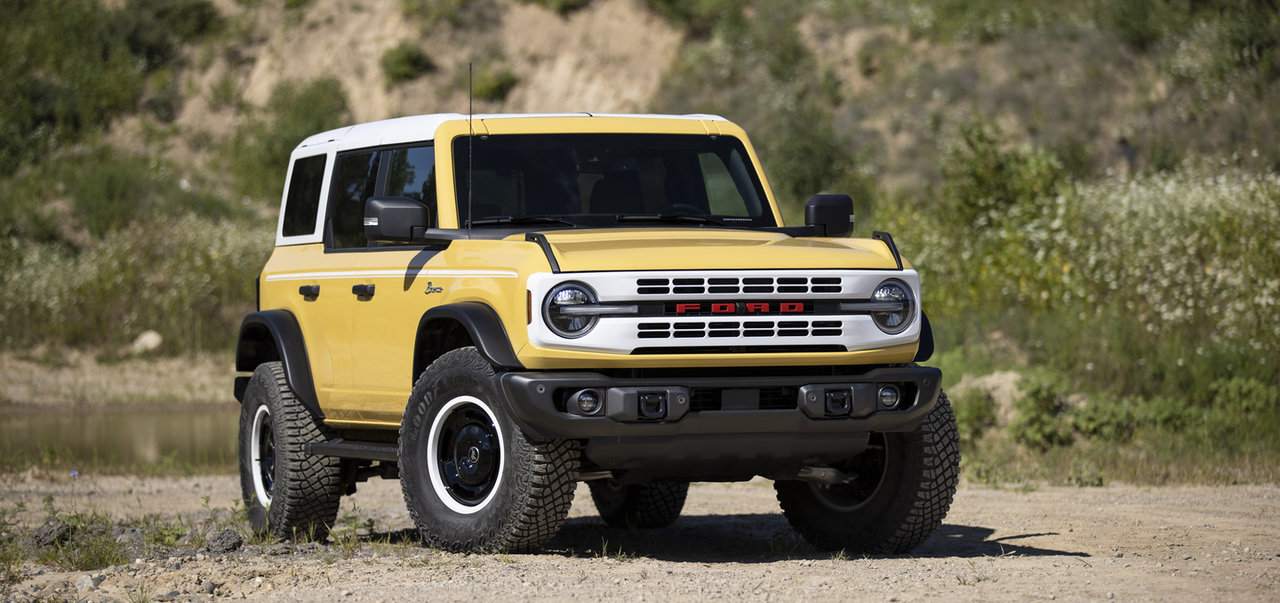
If you live outside the city - where gravel roads meet pavement, where boat launches and trailheads are part of the weekend routine - you need a vehicle that handles all of it without complaint. The 2026 Ford Explorer balances highway comfort with unpaved road competence, offers serious towing capability, and packs driver-assistance technology that makes long rural drives less tiring. For families in Nova Scotia's Annapolis Valley and along the South Shore, it's a do-everything SUV that earns its keep year-round.
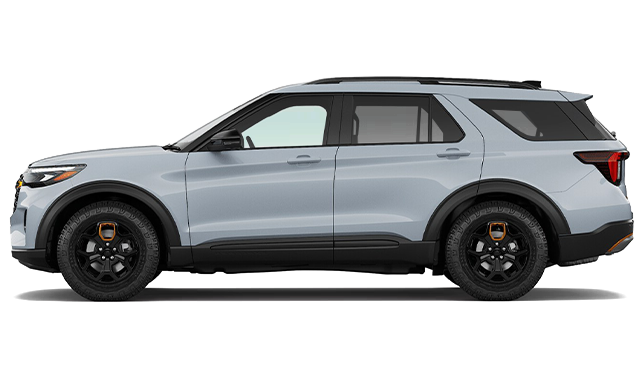
This year brings the first-ever Explorer Tremor - an off-road-focused variant engineered for muddy trails, sandy beaches, and rocky terrain. The broader Explorer lineup remains relevant for buyers who need three-row seating, cargo flexibility, and the confidence to tow a boat or camper.
What's New for 2026
The headline addition is the Explorer Tremor. Ford took the ST's 3.0-litre EcoBoost engine - 400 hp and 415 lb-ft - and paired it with off-road hardware: a Torsen limited-slip differential, an extra inch of ride height, underbody protection, and suspension tuned for rough terrain. The Tremor rides on 18-inch wheels with all-terrain tires and gets auxiliary off-road lights and electric spice-accented tow hooks. Approach and departure angles are improved to clear obstacles more easily.
BlueCruise 1.5 is now available across the lineup. This hands-free highway driving system, active on pre-mapped divided highways, reduces fatigue on long stretches of the 101 or Trans-Canada.
The Active, ST-Line, ST, and Platinum trims return with minor updates.
Performance and Powertrain
The Explorer offers two engines. The base 2.3-litre EcoBoost is available on select trims, delivering adequate power for daily driving and light towing with better fuel economy.
The 3.0-litre EcoBoost produces 400 hp and 415 lb-ft of torque in both ST and Tremor variants. This engine is built for towing and confident highway passing. If you're pulling a 24-foot boat to the Minas Basin or hauling a camper to Kejimkujik, this is your engine.
All Explorers come standard with all-wheel drive. The Tremor adds the Torsen limited-slip differential, which actively manages torque distribution to wheels with the most grip. On loose surfaces - sand, gravel, mud - this system keeps the Explorer moving when standard AWD would struggle.
The Tremor's suspension features specially tuned springs and sway bars, plus that extra inch of ride height, delivering a smoother, more controlled ride on rough roads without sacrificing on-pavement handling. The standard Explorer suspension is tuned for highway comfort, working well for families who mostly drive paved roads but occasionally venture onto cottage lanes or beach access roads.
Interior, Comfort and Technology
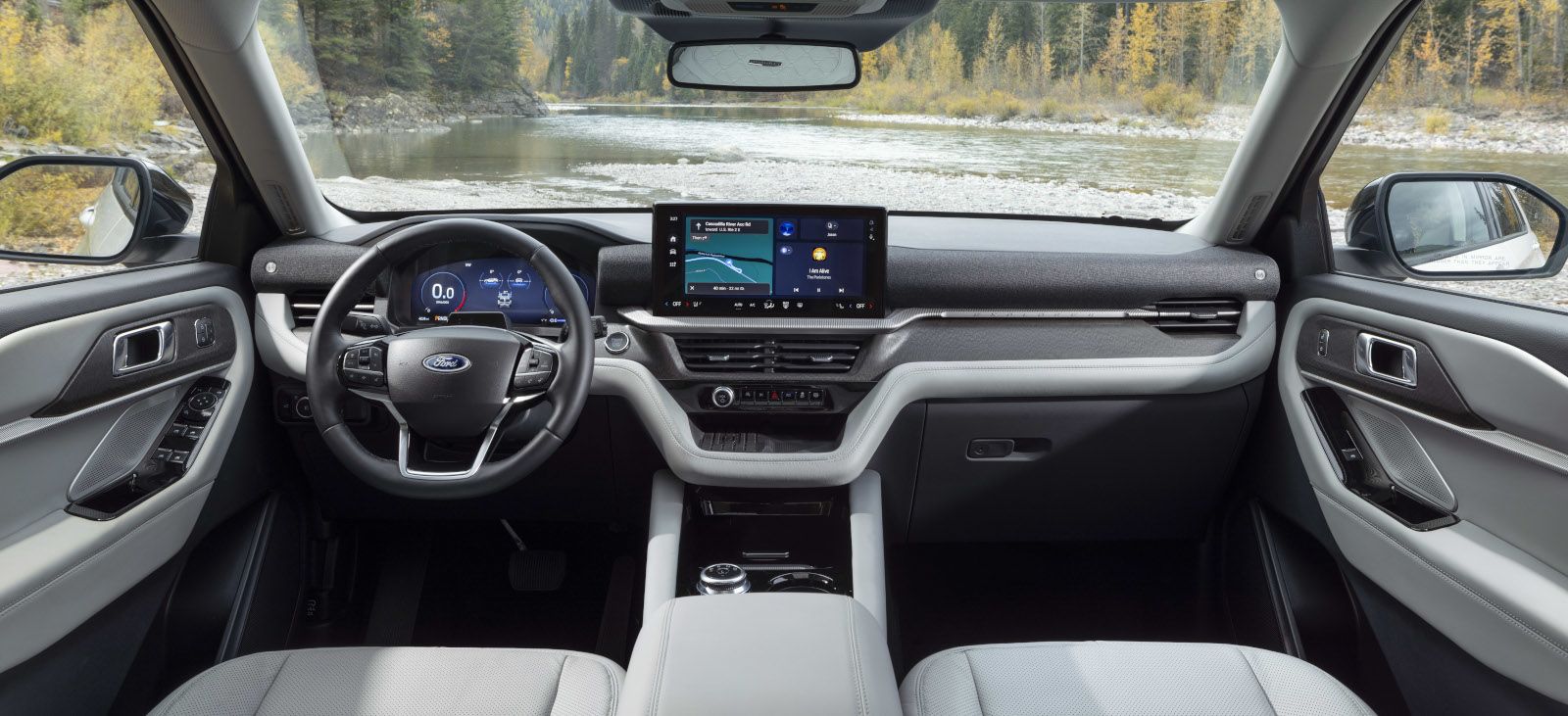
The Explorer seats up to seven across three rows. The second row accommodates adults comfortably on long drives, while the third row suits kids or shorter trips. When cargo space is needed, both rows fold flat. The Platinum trim adds PowerFold third-row seats that drop at the press of a button.
The Ford Digital Experience is standard, featuring a 13.2-inch touchscreen with wireless Apple CarPlay and Android Auto. The interface is faster and more responsive than the previous SYNC system. A wireless charging pad is available on higher trims.
Massaging front seats are available on Platinum. The optional 14-speaker B&O premium audio system delivers clear sound even at highway speeds. Heated second-row seats are available on ST-Line and Platinum trims - practical for families who spend time outdoors in cooler weather.
The Tremor gets unique touches: electric spice accent stitching, all-weather floor mats, and rubberized controls that are easier to use with gloves. These details matter if you're using the Explorer for trail access or beach trips where sand and mud are routine.
Safety Features
Ford Copilot 360 Assist 2.0 is standard on all trims, including automatic emergency braking, blind-spot monitoring, lane-keeping assist, and adaptive cruise control. These systems reduce driver fatigue on long highway stretches and help avoid low-speed collisions in parking lots or tight rural intersections.
BlueCruise 1.5 uses a driver-facing camera to monitor attention and disengages if the driver looks away too long. For rural drivers covering long distances on the 101 or Trans-Canada, BlueCruise reduces fatigue.
Standard rear cross-traffic alert warns of approaching vehicles when backing out - useful in busy trailhead parking lots or boat launch areas where visibility is limited.
Fuel Economy
The 2.3-litre EcoBoost returns better fuel economy than the 3.0-litre engine. Ford hasn't released official 2026 figures, but based on the 2025 model, expect the 2.3-litre to deliver around 11-12 L/100 km combined in real-world driving.
The 3.0-litre EcoBoost trades fuel economy for power and towing capability. If you're regularly towing or need extra performance, the trade-off is worth it. For mostly unloaded highway commuting, the 2.3-litre is more efficient.
All-wheel drive adds a small fuel economy penalty, but the Explorer is AWD-only in Canada. The system sends most power to the rear wheels under normal driving, minimizing the efficiency impact.
The Explorer That Fits Your Routine
The 2026 Explorer is built for families who need a vehicle that handles everything - highway commutes, gravel roads, boat launches, and weekend cottage trips. The Tremor adds serious off-road capability for buyers who spend more time on trails and beaches. The rest of the lineup balances comfort, technology, and towing capability for rural and coastal driving.
If you're looking for a three-row SUV that can tow, handle unpaved roads, and keep your family comfortable on long drives, the Explorer delivers. Visit Valley Ford in Kentville to explore the lineup and see which trim fits your routine.