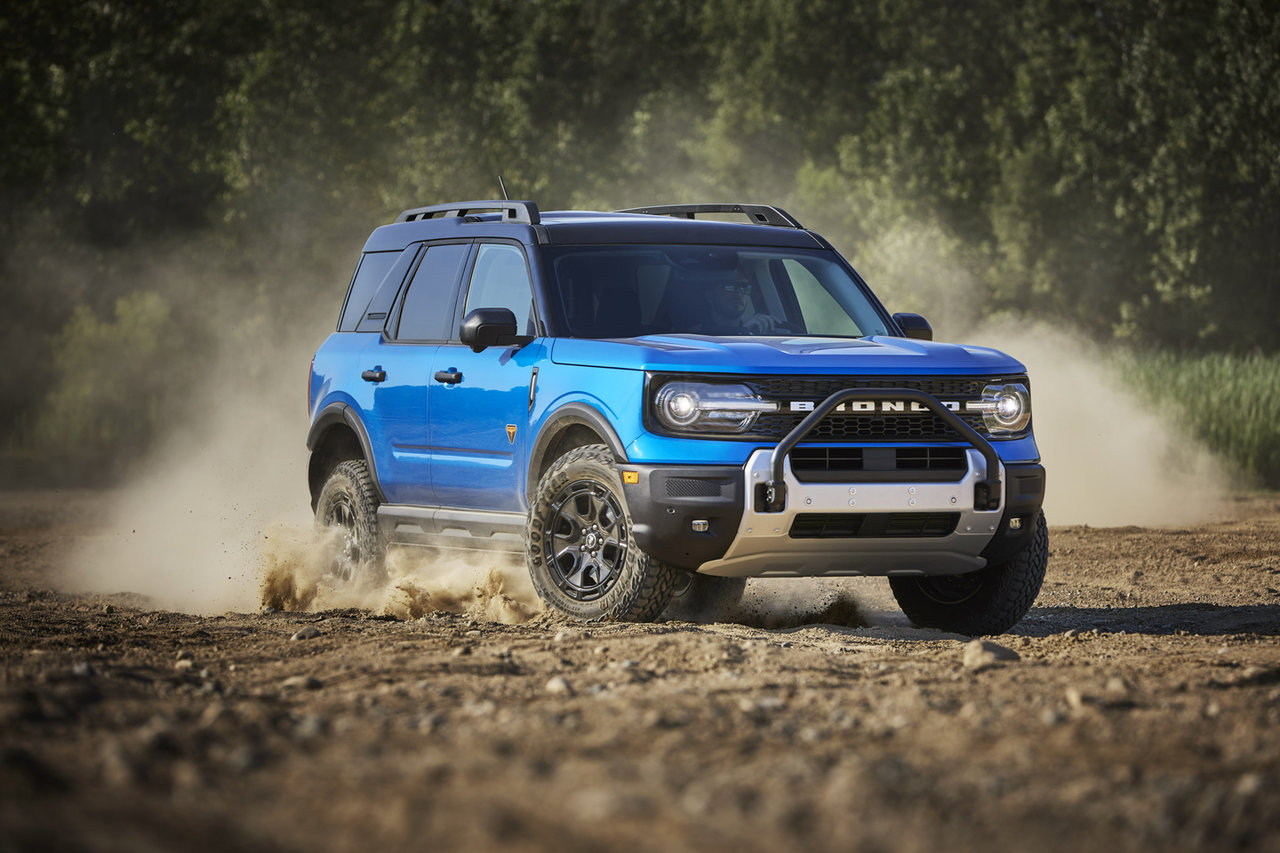
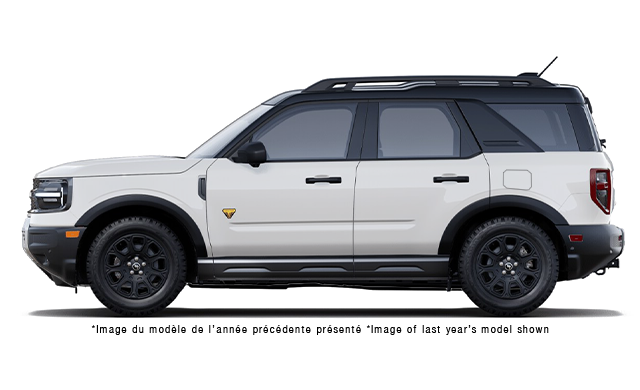
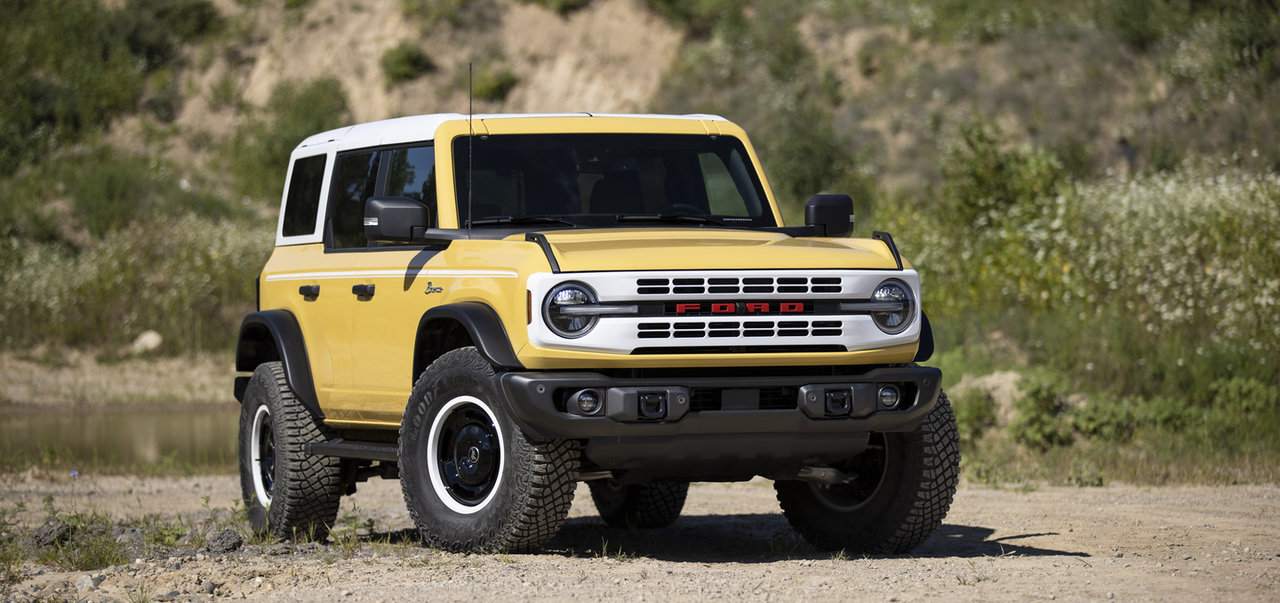
The 2026 Ford Bronco Sport answers a question the full-size Bronco 4-Door can't: how do you build a weekend adventure rig that fits Nova Scotia's tight coastal trails, washes down quickly after muddy runs, and doesn't punish your fuel budget? Ford split the Bronco lineup into two distinct platforms - the Sport prioritizes trail accessibility and daily practicality, while the 4-Door prioritizes maximum capability and payload. For Nova Scotia adventurers tackling logging roads, beach access trails, and provincial park campsites, the Bronco Sport's compact footprint and tech-forward design deliver more usable capability per dollar.
Bronco Sport vs Bronco 4-Door: Key Specifications
|
Feature
|
2026 Ford Bronco Sport
|
2026 Ford Bronco 4-Door
|
|
Engine Options
|
1.5L EcoBoost (180 hp), 2.0L EcoBoost (250 hp)
|
2.3L EcoBoost (300 hp), 3.0L EcoBoost V6 (418 hp)
|
|
Torque
|
200-280 lb-ft
|
315-440 lb-ft
|
|
Towing Capacity
|
2,200-2,700 lbs
|
3,500-4,500 lbs
|
|
Drive Modes
|
Up to 7 G.O.A.T. Modes (Badlands)
|
7 G.O.A.T. Modes
|
|
Seating
|
5 passengers
|
4-5 passengers
|
Where the Bronco Sport's Size Advantage Matters
The Bronco Sport's compact dimensions change what trails you can access. Nova Scotia's coastal routes and logging roads weren't designed for full-size SUVs. The Sport's shorter wheelbase and tighter turning radius open up beach access points, narrow forest service roads, and campground loops the 4-Door can't negotiate without three-point turns. This matters when threading through Kejimkujik's backcountry campsites or navigating the Cabot Trail's tight switchbacks.
While the 4-Door offers removable doors and roof panels, the Sport counters with a safari-style roof and standard roof rails that handle cargo without disassembly. The liftgate with adjustable floodlights and fender tie-downs make post-trip cleanup faster. The Sport's urban practicality extends beyond the trail - Halifax parking garages, Dartmouth side streets, and Lunenburg's narrow downtown blocks all favour the Sport's footprint.
Trail Technology: 360-Degree Camera vs Manual Spotting
The Bronco Sport's 360-degree camera with Trail View eliminates guesswork on technical sections. The system projects tire position and obstacle proximity onto the 13.2-inch touchscreen, letting solo drivers navigate rock gardens and rut crossings without a spotter. The 4-Door offers off-road navigation but lacks the Sport's real-time visual feedback for wheel placement.
While the 4-Door's stabilizer bar disconnect and 35-37-inch tire options deliver superior articulation on extreme terrain, the Sport's Trail View technology makes moderate obstacles easier to clear. For Nova Scotia's mixed-surface trails, where roots, rocks, and mud change every 50 metres, the Sport's camera system provides more practical value.
The Sport's G.O.A.T. Modes include Normal, Eco, Sport, Slippery, and Off-Road across the lineup, with Rock Crawl and Rally modes on the Badlands trim. The 4-Door matches this with seven modes standard, but the Sport's modes are calibrated for its lighter curb weight and shorter wheelbase, delivering sharper throttle response on tight trails.
Power and Towing: Where the 4-Door Pulls Ahead
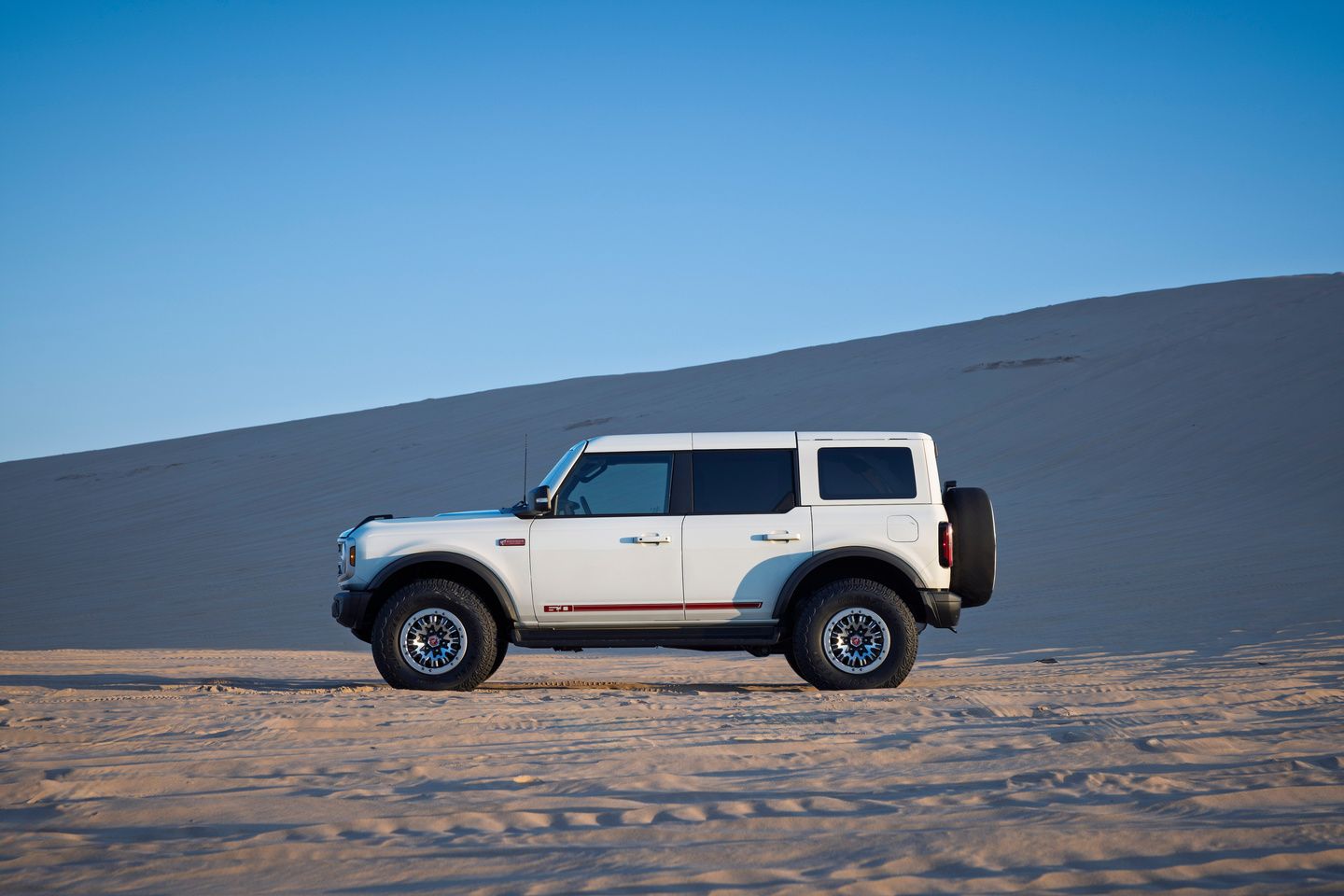
The 4-Door's 2.3L EcoBoost generates 300 hp and 325 lb-ft in base configuration, with the Raptor's 3.0L V6 pushing 418 hp and 440 lb-ft. The Sport counters with 180 hp from the 1.5L or 250 hp from the 2.0L EcoBoost. While the 4-Door's power advantage is undeniable, the Sport's lighter platform delivers adequate acceleration without the fuel penalty.
The 4-Door's towing capacity reaches 3,500-4,500 lbs, handling larger boat trailers, utility trailers, and camper setups the Sport can't match. The Sport tops out at 2,200-2,700 lbs depending on trim, which covers kayak trailers, small utility trailers, and lightweight camping setups. For Nova Scotia adventurers whose heaviest load is a tandem-axle utility trailer or 16-foot aluminum boat, the Sport's rating is sufficient.
Suspension and Off-Road Hardware
The Bronco Sport's HOSS 2.0 system uses independent front and rear suspension with Bilstein rear shocks on the Badlands trim. The 4-Door's HOSS Suspension System employs a more robust setup designed for heavier loads and extreme articulation. While the 4-Door's suspension delivers superior wheel travel and obstacle clearance, the Sport's independent rear suspension provides a more composed ride on paved roads and gravel highways.
The Sport's standard steel-plated bumpers, available front brush guard, and skid plates protect critical components on Nova Scotia's rock-strewn trails. For trails demanding maximum ground clearance and articulation, the 4-Door's hardware wins. For mixed-use driving including daily commuting and weekend trail runs, the Sport's suspension balance reduces fatigue on long highway stretches.
Interior Tech and Connectivity
The Bronco Sport's 13.2-inch touchscreen and 12.3-inch digital instrument panel run Ford's SYNC 4 system with wireless Apple CarPlay and Android Auto. The interface supports over-the-air software updates, keeping navigation maps current without dealer visits. The 4-Door offers a 12-inch touchscreen with SYNC infotainment, but the Sport's larger screen and wireless charging pad make phone connectivity more smooth for drivers relying on trail apps and GPS tracking.
The Sport includes six USB-C inputs and an available B&O sound system, matching the 4-Door's connectivity while adding wireless charging as standard on upper trims.
Safety and Driver Assistance Features
The Bronco Sport's Co-Pilot360 Assist+ suite includes Pre-Collision Assist with Emergency Braking, Adaptive Cruise Control with Stop-and-Go and Lane Centering, BLIS with Cross-Traffic Alert, Lane Keeping System, Evasive Steering Assist, Reverse Brake Assist, and front/rear parking sensors. The 4-Door matches these with advanced driver assistance systems. The Sport's adaptive cruise control with lane centering reduces driver fatigue on long highway runs to trailheads.
Trim Strategy: Big Bend to Badlands
The Bronco Sport lineup spans five trims: Big Bend, Heritage, Free Wheeling, Outer Banks, and Badlands. The Big Bend starts with the 1.5L EcoBoost, standard 4WD, and five G.O.A.T. Modes. The Badlands adds the 2.0L EcoBoost, 250 hp, Rock Crawl and Rally modes, and Bilstein rear shocks. The 4-Door's trim range includes Base, Big Bend, Black Diamond, Outer Banks, Badlands, Wildtrak, Everglades, Heritage, and Raptor, with the Raptor delivering 418 hp from the 3.0L V6.
For buyers wanting maximum off-road capability without stepping up to the 4-Door's size and fuel consumption, the Bronco Sport Badlands delivers 250 hp, seven G.O.A.T. Modes, and upgraded suspension at a more accessible price point.
The Verdict: Trail Accessibility Over Maximum Capability
The 2026 Ford Bronco Sport wins for Nova Scotia adventurers who prioritize trail accessibility, daily practicality, and fuel efficiency over maximum towing capacity and extreme off-road capability. The Sport's compact footprint opens up trails the 4-Door can't access, its 360-degree camera with Trail View eliminates the need for a spotter on technical sections, and its 9.3 L/100 km fuel economy reduces the cost of every weekend trip.
While the Bronco 4-Door's 3,500-4,500 lbs towing capacity and 418 hp Raptor variant deliver superior capability for heavy-duty applications, the Sport's 2,200-2,700 lbs rating covers the vast majority of recreational towing needs without the fuel penalty and parking challenges. For weekend warriors who spend more time navigating tight forest service roads than towing heavy trailers, the Bronco Sport delivers more usable capability per dollar spent.
Valley Ford in Nova Scotia can walk you through the Bronco Sport's trim options and help you configure the right setup for your local trails. The Sport's combination of trail technology, urban practicality, and fuel efficiency makes it the stronger choice for adventurers who want a capable rig that doesn't compromise daily driving.